
Outsource Payroll Company guide
Plan the retained payroll team after outsourcing
Published:
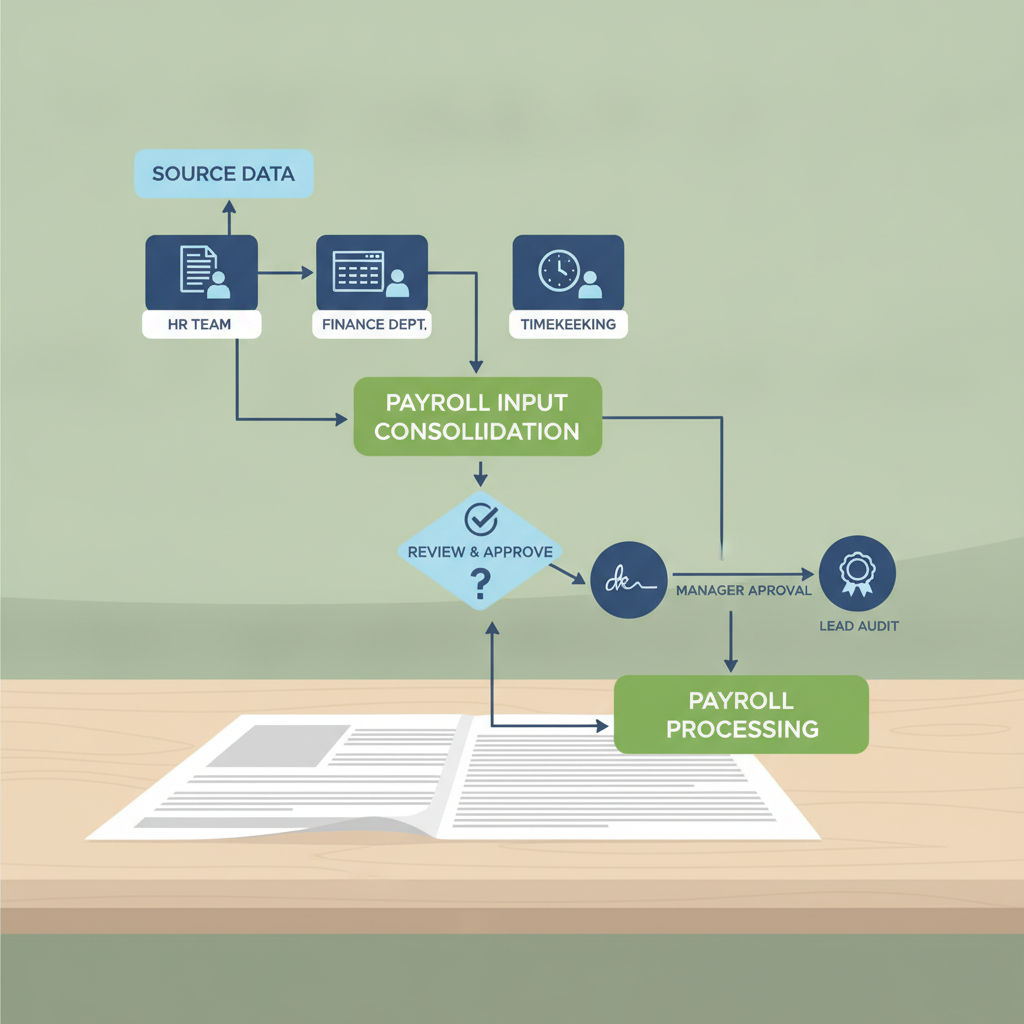
Estimate the internal ownership, review capacity, specialist access, and backup coverage that remain necessary after payroll work is outsourced.
The short answer
Estimate the internal ownership, review capacity, specialist access, and backup coverage that remain necessary after payroll work is outsourced.
Base the decision on a retained-work capacity model covering ordinary cycles, peak periods, incidents, and change projects and keep consequential authority with the client.
Payroll handoff readiness check
Use this table before a provider or Philippines-based payroll support specialist receives access. Match every row to a named owner before the first login.
| Work area | Ready to hand off when | Owner check |
|---|---|---|
| Scope | Population, period, systems, deadline, and exclusions are written. | Confirm the decision and authority. |
| Evidence | Facts, claims, assumptions, and observations remain distinct. | Resolve conflicts. |
| Access | Named access is limited to the task. | Approve removal date. |
| Decision | Consequential questions have owners. | Record the decision. |
“There is no implicit trust granted to assets or user accounts based solely on their physical or network location.”
NIST SP 800-207
Start with the work that stays inside the business
A payroll provider can prepare calculations, operate agreed checks, and organize cycle evidence, but outsourcing does not remove the employer's decisions. List retained work before discussing headcount. Include approval of employee and pay changes, interpretation of policy, source-data ownership, treasury instructions, final payroll release, access decisions, employee escalations, tax or employment questions, provider oversight, audit support, and changes to the service. Describe the output and decision for each activity rather than writing broad labels such as governance. A retained team that cannot identify its own deliverables will absorb work informally, making the business case look better while queues and risk accumulate out of sight. Connect every activity to a pay group and calendar so the estimate reflects when work occurs, not merely that it exists.
Measure demand at the point it arrives
Monthly averages are a poor basis for payroll staffing because demand gathers around cutoffs, review windows, funding deadlines, year-end, and organizational change. For each retained task, record frequency, ordinary volume, preparation minutes, decision minutes, specialist wait time, and the latest safe completion point. Separate predictable work from exceptions. Ten routine changes spread across a week are different from ten corrections arriving during final review. Use recent cycle records where they exist, but inspect what those records omit: manager chasers, rejected files, reopened employee cases, access administration, and time spent explaining incomplete requests. Build an ordinary-cycle view and at least one peak view. The capacity question is whether qualified people are available inside the deadline window, not whether their monthly hours appear sufficient.
Distinguish preparation from accountable judgment
A common planning error is to transfer preparation hours to the provider and remove the same number of internal hours. Map the handoff more carefully. The provider may collect a file, test its format, and report exceptions; an internal owner may still need to confirm the source, decide whether a late item can proceed, obtain specialist advice, and approve the resulting output. Those minutes require different skills and cannot always be pooled. Estimate preparation, review, decision, and evidence-retention time separately. Then name the role permitted to perform each part. This prevents an analyst from becoming the default authority for policy or funding because that person happens to be available. It also exposes designs in which a senior approver is expected to inspect more detail than the review window reasonably permits.
Model a holiday week instead of assuming backup coverage
Test the plan against a specific absence. Imagine that the provider has prepared the cycle correctly, but the sole internal approver is unavailable during a holiday week. Ask who can access the review output, understand the material exceptions, obtain answers from HR or finance, authorize the agreed action, and release payroll before cutoff. A name in a responsibility chart is not enough. The backup needs current access, delegated authority, calendar protection, and recent practice. If approval cannot lawfully or operationally be delegated, the plan needs an earlier review, a different decision route, or explicit leadership acceptance of the constraint. Repeat the exercise with a simultaneous urgent correction and provider question. Record each handoff and elapsed time; the exercise should change the capacity model when it exposes hidden work.
Reserve specialist capacity without pretending specialists join payroll
Some cases need tax, employment, benefits, privacy, security, accounting, or treasury judgment. These specialists need not sit permanently in the payroll team, but the operating model must state how work reaches them and when an answer is required. Define the information package, protected channel, priority test, primary contact, backup route, and escalation point. Estimate waiting time separately from payroll effort so a delayed answer is not misreported as provider inactivity. Review recurring referrals. Repeated questions about the same policy or data rule may justify clearer instructions or a controlled decision table, while genuinely novel cases should remain with qualified owners. Do not turn response targets into a promise of legal or tax outcomes. They are planning assumptions that reveal whether the payroll calendar and specialist service can coexist.
Give provider management a real workload allowance
Retained capacity must cover management of the service, not just production of each payroll. Someone needs to review performance evidence, challenge recurring defects, approve controlled changes, maintain contacts, follow contractual actions, prepare service meetings, and verify that promised remedies worked. Count this work by its actual cadence and consequence. A short weekly operational review may prevent long monthly debates if it has clear inputs and owners. Conversely, a polished scorecard does not replace investigation of an incorrect deduction or a repeatedly missed handoff. Allocate time for trend analysis and for reading the underlying cases. Name who can accept a workaround, who can request a contract change, and who owns commercial discussion. Without that separation, routine operational pressure can quietly redefine the service.
Compare capacity with the deadline-shaped queue
Turn the activity inventory into a calendar view. Place the provider input cutoff, internal review opening, exception deadline, approval point, funding action, pay date, and employee-support peak on the same timeline. Add the retained tasks and the roles able to perform them. Calculate available qualified hours inside each window after meetings, leave, and other payrolls, rather than treating every working hour as interchangeable. Watch for queues that move work into the next control: unresolved input questions compress review; late review compresses approval; delayed approval threatens funding. Options may include earlier internal cutoffs, clearer intake standards, cross-training, scheduled specialist coverage, or an additional reviewer. Choose based on the measured bottleneck. Adding general capacity will not solve a narrow authority gap at final release.
Use outcomes to recalibrate the retained model
During early live cycles, record owner workload, review-queue age, backup use, specialist wait time, overtime, decisions missed before cutoff, and work returned for incomplete evidence. Review the cases behind the numbers. A low average queue can hide one material item that waited until the last safe minute; high effort may reflect a temporary transition issue rather than permanent staffing need. Compare planned minutes with observed work by activity and deadline window, then revise the model with an explanation. Keep service failures separate from buyer capacity constraints while showing where they interact. The retained team should have enough space to challenge provider output, investigate exceptions, and improve the process, not merely feed the provider. Revisit the model after acquisitions, new pay groups, policy changes, system releases, or sustained volume shifts.
Document a capacity decision leaders can revisit
Summarize the recommended roles, named ownership, backups, peak assumptions, specialist dependencies, and unresolved constraints. Show at least two alternatives, such as increasing trained review coverage or moving an internal cutoff earlier, with the operational consequence of each. State what the evidence does not prove. A workload model cannot guarantee accuracy, compliance, employee satisfaction, or uninterrupted service. It can show whether the proposed team has plausible time and authority to perform known retained work under tested conditions. Assign an owner to refresh the inputs and a trigger for reopening the decision. OutsourcePayrollCompany.com can help organize operating evidence and handoffs, while the client keeps staffing, policy, employment, treasury, specialist, and final payroll authority.
Copy-ready brief
Payroll support role brief
Replace the tool names and owner details, then use this list in a provider call or job brief.
- Routine: Plan the retained payroll team after outsourcing
- Output: a retained-work capacity model covering ordinary cycles, peak periods, incidents, and change projects
- Access: named, least-privilege accounts
- Approval: authorized client owners
- Stop: unclear source, identity, channel, scope, or authority
Questions from payroll buyers
Who owns retained payroll team capacity planning?
Support prepares a retained-work capacity model covering ordinary cycles, peak periods, incidents, and change projects; authorized client owners retain staffing, job design, policy, specialist advice, treasury approval, employment decisions, and payroll release.
What should the first pilot include?
Use one representative cycle including the provider prepares the cycle correctly but the only internal approver is unavailable during a holiday week.
How is progress reviewed?
Track owner workload, review queue age, backup coverage, specialist wait time, overtime, and decisions missed before cutoff, then verify consequential exceptions with their owners.
Sources
- IRS Publication 15 (2026), Employer's Tax GuideOfficial employer guidance for federal payroll records, deposits, reporting, and corrections.
- U.S. Department of Labor Fact Sheet #21Official summary of federal wage and hour recordkeeping requirements.
- NIST SP 800-53 Rev. 5Official security and privacy control guidance.
- Philippine National Privacy Commission: Data Privacy ActOfficial Philippine privacy resource for teams handling personal information.