
Outsource Payroll Company guide
Run a quarterly payroll provider performance review that leads to action
Published:
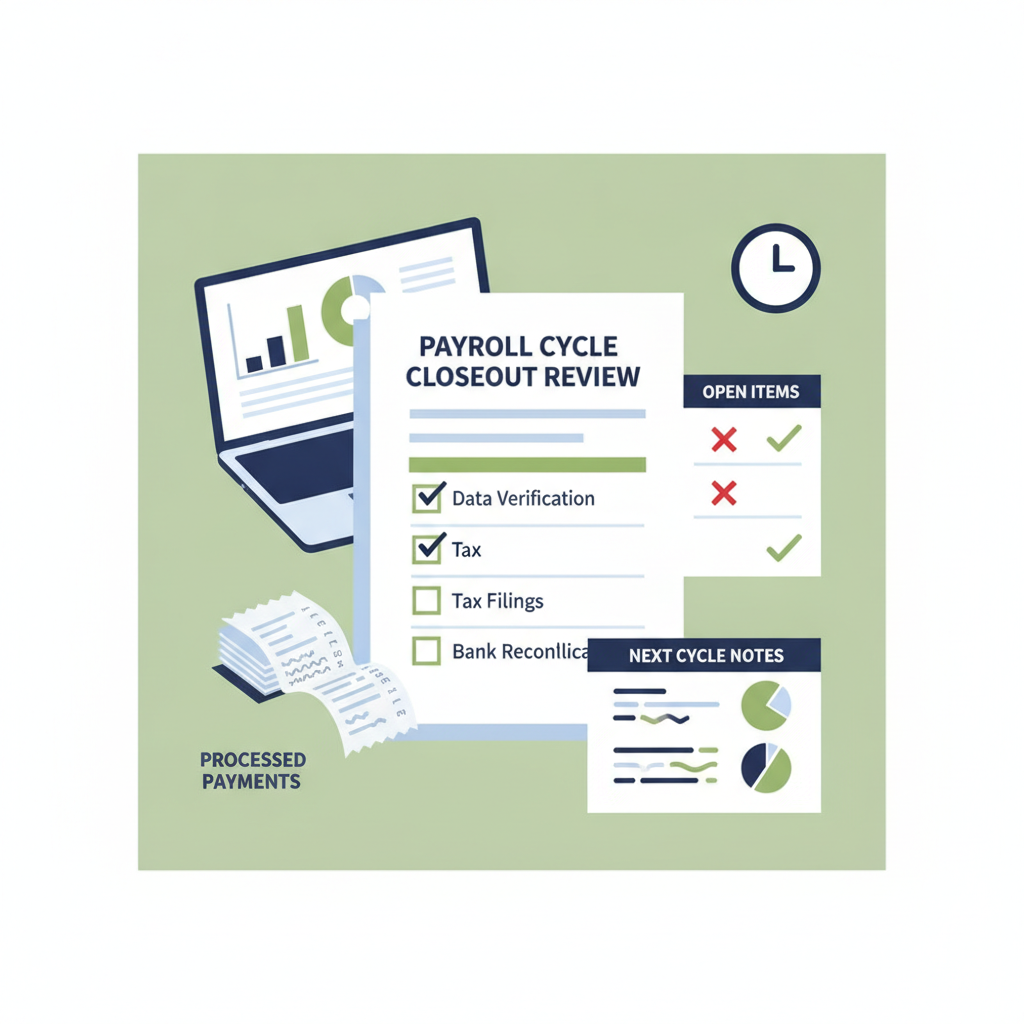
Combine service events, control evidence, customer experience, changes, risks, and improvement ownership in a decision-focused review.
The short answer
Combine service events, control evidence, customer experience, changes, risks, and improvement ownership in a decision-focused review.
Base the decision on a performance review pack with event-level evidence, trends, decisions, and dated improvement commitments and keep consequential authority with the client.
Payroll handoff readiness check
Use this table before a provider or Philippines-based payroll support specialist receives access. Match every row to a named owner before the first login.
| Work area | Ready to hand off when | Owner check |
|---|---|---|
| Scope | Population, period, systems, deadline, and exclusions are written. | Confirm the decision and authority. |
| Evidence | Facts, claims, assumptions, and observations remain distinct. | Resolve conflicts. |
| Access | Named access is limited to the task. | Approve removal date. |
| Decision | Consequential questions have owners. | Record the decision. |
“There is no implicit trust granted to assets or user accounts based solely on their physical or network location.”
NIST SP 800-207
Frame the review around decisions, not a presentation
A quarterly provider review should end with explicit choices: maintain a control, correct a recurring failure, test a proposed remedy, escalate a material issue, change the service, investigate an unknown, or accept a stated risk through the proper authority. Begin by listing the services, entities, pay groups, period, measures, major changes, and open actions inside scope. Put exclusions and missing evidence beside them. Define who owns operational findings, commercial questions, security or privacy matters, payroll approval, and executive decisions. The provider can explain performance and propose action; the buyer's authorized owners decide whether evidence is sufficient and which consequences or remedies apply. A polished scorecard is an input, not the review outcome.
Lock definitions and sources before reading the result
For every measure, record its definition, numerator, denominator, exclusions, time zone, start and stop events, source system, extraction date, target, and owner. Preserve the period snapshot. Response, resolution, accuracy, timeliness, and availability can mean different things across teams, so do not compare percentages until the underlying event rules match. Separate automated acknowledgement from human triage and verified completion. Show buyer waiting time and provider working time where the approved measure requires them, but retain the total employee or payroll consequence. If a metric definition changed during the quarter, display the periods separately and explain the change rather than joining incompatible values into a reassuring trend.
Read material events before averages
List incidents, missed cutoffs, incorrect calculations, delayed corrections, funding exceptions, access issues, privacy or security events, repeated employee cases, and other consequential failures identified by the approved scope. For each, show the affected population, payroll stage, detection time, deadline, immediate control, verified outcome, root-cause status, and open action. A quarter with thousands of timely routine transactions can still contain one failure that deserves leadership attention. Conversely, a low-impact queue can distort an average without representing the greatest risk. Use aggregate measures for context, then inspect event evidence. Do not offset positive and negative worker errors or let a green headline erase a reopened case.
Separate provider performance from buyer dependencies
Classify each delay or defect using evidence: provider work, buyer source, owner decision, third-party dependency, shared handoff, or unresolved cause. Record both sides when the event crossed ownership. This is not an exercise in assigning blame. It identifies which operating change can prevent recurrence. A provider may wait for an approved input while also failing to escalate before the last safe time; a buyer may submit late while the provider applies an incorrect validation rule. Keep contractual attribution with authorized commercial owners. Operational reviewers should preserve the timeline, source versions, requests, responses, and verified result so those owners can decide without reconstructing the case from competing summaries.
Revisit the two correction delays behind green service levels
Suppose headline service levels are green although employees experienced two material correction delays. Reconstruct both cases from initial report through identity checks, diagnosis, buyer decision, provider action, approval, payment or output, employee communication, and verified closure. Compare each timestamp with the payroll calendar and agreed service definitions. Identify reopenings, handoff gaps, unavailable owners, incomplete evidence, and any workaround that created later work. Then ask whether the scorecard excluded the events, measured only acknowledgement, diluted them within a large denominator, or accurately reported them under a measure that does not capture consequence. The answer determines whether the remedy belongs in operations, metric design, contract governance, or several places.
Verify prior commitments before accepting new ones
Carry forward every earlier action with its original owner, due date, promised output, acceptance evidence, current status, and reviewer. Require the actual artifact or observed result, not a statement that work is complete. If the provider changed a validation rule, inspect controlled release and retest evidence. If the buyer promised a cleaner input, compare the recent source and rejection pattern. Close an action only when the designated reviewer accepts its result. Record revised dates and reasons without overwriting the missed commitment. Repeated extensions, reopened defects, or remedies that address symptoms should be visible in the quarterly decision. New actions do not replace overdue ones unless an authorized owner explicitly changes the plan.
Make each improvement testable
Write an action as a specific output with one accountable owner, due date, affected population, implementation evidence, acceptance test, reviewer, and escalation point. Improve communication is not testable; publishing a revised exception route, training named backups, and completing a timed scenario by a set date is. Separate immediate containment from permanent correction. A workaround may protect the next payday while root-cause work continues, but it needs scope, expiry, risk owner, and return-to-normal steps. Keep decisions about service credits, contractual remedies, investment, staffing, and risk acceptance with the client roles authorized to make them. The coordinator maintains the record and alerts owners; that role does not accept an incomplete remedy.
Include change, capacity, and future risk
Review upcoming acquisitions, seasonal peaks, year-end work, pay-group changes, bank holidays, system releases, interface changes, key-person absences, contract milestones, assurance expiry, and provider subcontractor changes that are known and relevant. Translate each into an owner, decision date, readiness evidence, and test where appropriate. Do not treat a future risk register as proof that capacity or continuity exists. Ask how the provider and buyer will handle the event through the actual calendar and escalation path. Keep speculative items labeled as such. The quarterly forum should connect past event evidence with near-term operating choices rather than spend the whole session explaining last quarter's percentages.
Publish a decision record and verify the next quarter
Record the measures used, source period, material events, accepted findings, disputed facts, decisions, actions, owners, dates, acceptance evidence, and commercial or specialist referrals. Restrict protected event details while giving decision-makers enough traceability. Track material incidents, repeated exceptions, service misses, reopened cases, action aging, control gaps, and verified improvements during the next period. At the following review, begin with this record instead of a new slide narrative. OutsourcePayrollCompany.com can prepare event summaries, maintain action evidence, coordinate follow-ups, and organize the review pack within an agreed operations support lane. The client retains performance ratings, remediation priorities, risk acceptance, contractual remedies, executive escalation, renewal direction, and final payroll authority.
Copy-ready brief
Payroll support role brief
Replace the tool names and owner details, then use this list in a provider call or job brief.
- Routine: Run a quarterly payroll provider performance review that leads to action
- Output: a performance review pack with event-level evidence, trends, decisions, and dated improvement commitments
- Access: named, least-privilege accounts
- Approval: authorized client owners
- Stop: unclear source, identity, channel, scope, or authority
Questions from payroll buyers
Who owns quarterly payroll provider performance review?
Support prepares a performance review pack with event-level evidence, trends, decisions, and dated improvement commitments; authorized client owners retain performance rating, remediation priority, service credit, contract change, risk acceptance, executive escalation, and renewal direction.
What should the first pilot include?
Use one representative cycle including headline service levels are green although employees experienced two material correction delays.
How is progress reviewed?
Track material incidents, repeated exceptions, service misses, reopened cases, action aging, control gaps, and verified improvements, then verify consequential exceptions with their owners.
Sources
- IRS Publication 15 (2026), Employer's Tax GuideOfficial employer guidance for federal payroll records, deposits, reporting, and corrections.
- U.S. Department of Labor Fact Sheet #21Official summary of federal wage and hour recordkeeping requirements.
- NIST SP 800-53 Rev. 5Official security and privacy control guidance.
- Philippine National Privacy Commission: Data Privacy ActOfficial Philippine privacy resource for teams handling personal information.