
Outsource Payroll Company guide
Prepare outsourced payroll for a merger or acquisition
Published:
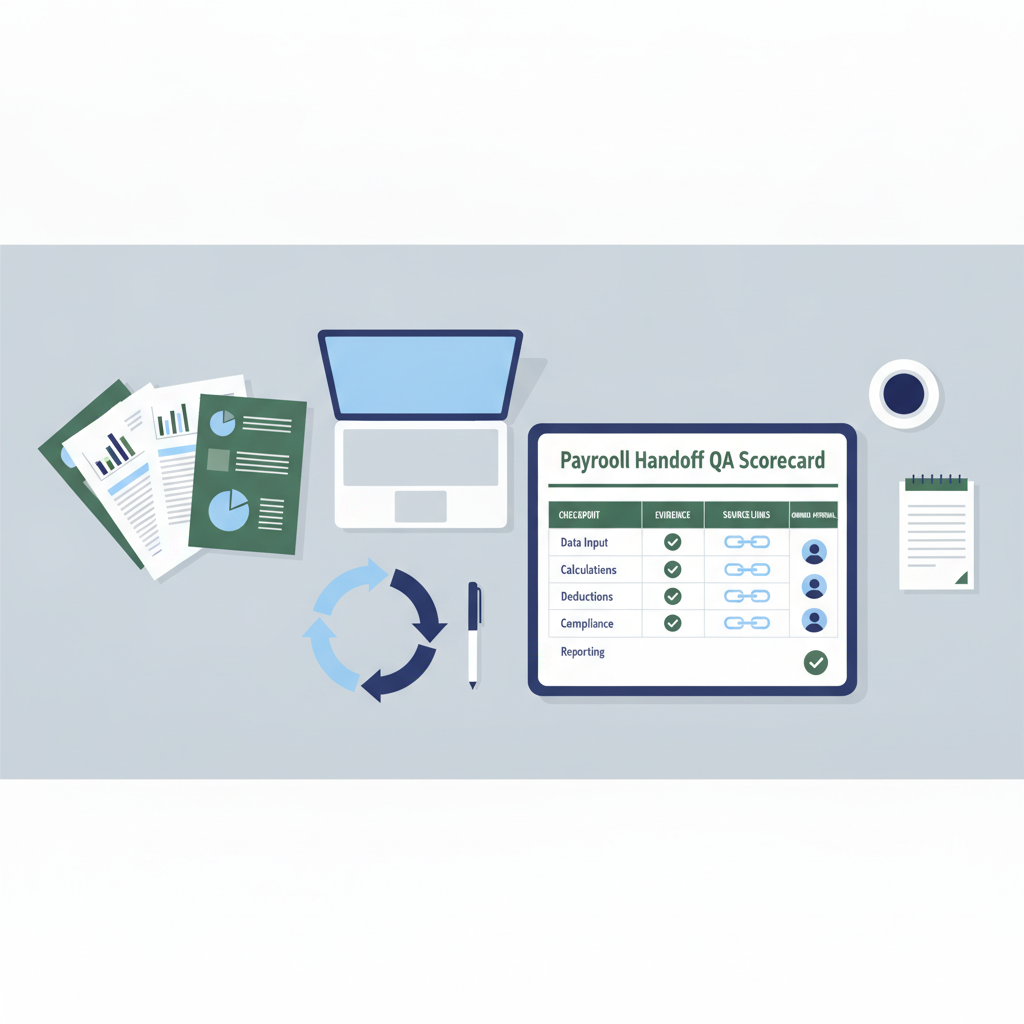
Inventory entities, populations, calendars, contracts, data, controls, and transition choices before combining payroll operations.
The short answer
Inventory entities, populations, calendars, contracts, data, controls, and transition choices before combining payroll operations.
Base the decision on a payroll integration decision book organized by entity, population, dependency, and milestone and keep consequential authority with the client.
Payroll handoff readiness check
Use this table before a provider or Philippines-based payroll support specialist receives access. Match every row to a named owner before the first login.
| Work area | Ready to hand off when | Owner check |
|---|---|---|
| Scope | Population, period, systems, deadline, and exclusions are written. | Confirm the decision and authority. |
| Evidence | Facts, claims, assumptions, and observations remain distinct. | Resolve conflicts. |
| Access | Named access is limited to the task. | Approve removal date. |
| Decision | Consequential questions have owners. | Record the decision. |
“There is no implicit trust granted to assets or user accounts based solely on their physical or network location.”
NIST SP 800-207
Protect payroll continuity before choosing a target model
A merger or acquisition creates pressure to announce one provider and one process quickly. Payroll readiness starts elsewhere: identify what must continue for each employing entity and worker population through the next several pay cycles. Record pay groups, frequencies, currencies, bank routes, calendars, providers, systems, approval roles, support channels, and known exceptions. Distinguish legal close, operational control, employee transfer, system migration, and payroll consolidation because they may occur on different dates. Do not assume that common ownership immediately changes employment, tax, funding, privacy, or contractual duties. The first decision may be controlled coexistence rather than consolidation. That can be a sound transition state when its owners, costs, dependencies, information flows, and exit conditions are explicit.
Build the inventory by entity and population
Use one row for each meaningful payroll population, not one row per company name. Include employing entity, work locations, worker categories, active and inactive counts, pay frequency, provider, contract, source systems, calculation engine, currency, bank account or funding route, filing dependencies, benefit interfaces, calendar, internal owner, provider contact, and evidence location. Add correction, off-cycle, year-end, historical inquiry, and leaver processes because these often outlive the ordinary payroll. Mark facts that have been verified separately from management estimates or seller statements. Similar field names may have different definitions, so record the source date and owner. Keep employee-level evidence in approved protected systems and use population totals or references in the integration decision book.
Map contracts and service dependencies before setting dates
For every provider and critical system, identify contracting entity, term, notice rules, transition assistance, data-return obligations, archive access, implementation commitments, minimum fees, change fees, subcontractors, and open disputes or remediation. Route interpretation and negotiation to authorized commercial and legal owners. Operational teams can state what service is needed and when, but they should not treat a desired consolidation date as a contractual right. Include dependencies that sit outside the payroll contract, such as banking facilities, identity services, timekeeping, benefits, accounting, local advisers, and secure transfer channels. A target date is credible only when required owners have resolved or bounded these dependencies and the receiving model has time to test them.
Trace one worker through each existing model
Select representative protected cases from every entity: an ordinary employee, a starter, a leaver, a retroactive change, an absence or benefit case, and a worker with a prior correction where relevant. Follow the approved source, effective date, provider input, calculation, review, approval, funding, downstream record, employee support, and retained history. The purpose is not to copy the legacy workflow automatically. It is to expose obligations, exceptions, local definitions, and tacit knowledge that a high-level process map misses. Record who can explain each step and what evidence proves the result. If the walkthrough relies on one person's memory or an expiring account, assign a continuity action before that access or knowledge disappears.
Test the request for rapid provider consolidation
Suppose the acquired entity uses a different pay frequency, provider, and banking route while leadership requests immediate movement to the buyer's provider. Compare three bounded options: temporary coexistence, phased migration, and one-date consolidation. For each, show the populations, contract action, source-data readiness, calendar fit, configuration, funding, access, testing, communications, support, cost, and rollback implications. Use the same acceptance criteria so the preferred option is not favored by an easier test. State what is unknown and the last responsible decision time. Leadership may choose speed, but it should see whether speed removes testing time, splits year-to-date history, compresses employee action, or creates parallel funding and support obligations.
Keep Day One separate from later harmonization
Day One may require confirmed contacts, payroll ownership, incident routes, protected data access, approval continuity, funding authority, and employee support. It rarely requires every pay practice, job label, calendar, or system to become identical. Create a separate harmonization register for differences that need policy, employment, tax, benefits, finance, legal, or employee-relations decisions. For each difference, record the populations, current rule, proposed future state, decision owner, evidence, consultation or communication dependency, effective date, system changes, and payroll test. Do not solve ambiguity by configuring the buyer's default. Preserve the existing authorized instruction until the correct owner approves a change and its consequences have been tested.
Design data transfer around usable history
Inventory master records, dated employment events, year-to-date balances, deductions, taxes, benefits, payments, filings, approvals, exceptions, support cases, audit logs, configuration, and attachments. Define which data migrates, which remains in an accessible archive, and who can answer a historical request after contacts change. Require data dictionaries, code meanings, extraction timestamps, counts, hashes where appropriate, secure channels, and retention instructions. A PDF archive may support retrieval but not calculation or bulk reconciliation; a database extract without definitions can also be unusable. Test one worker history, one correction, one balance, and one evidence request from each entity. Reconcile rejected or transformed records through corrected output rather than accepting a matching grand total.
Gate migration on evidence and a reversible decision
Set entry and exit evidence for discovery, design, configuration, access, conversion, parallel comparison, funding rehearsal, support readiness, and launch approval. A gate should identify the tested population, source versions, expected outcome, defects, workaround, authorized risk owner, and retest result. Prepare a rollback or delay route that states which system remains authoritative, how new changes are captured, how duplicate processing is prevented, and how employees and providers receive accurate instructions. Reduced scope can create its own risk when similar populations follow different processes, so assess it explicitly. The final launch decision stays with named client owners; a provider readiness statement or project percentage is supporting evidence, not authority.
Run the integration book until steady ownership is proven
Track populations inventoried, source gaps, open decisions, contract actions, calendar conflicts, test coverage, defects by consequence, data exceptions, backup readiness, and unresolved transition risks. Review event-level evidence instead of allowing totals to hide one unsupported entity or payment route. After launch, reconcile the approved population, material changes, provider outputs, funding evidence, support cases, and every accepted exception. Remove temporary access and transfer open work to steady-state owners with dates. OutsourcePayrollCompany.com can maintain inventories, dependency registers, test evidence, and owner follow-ups within an agreed operations support lane. The client and its qualified advisers retain entity treatment, employment, tax, contracts, data-transfer authority, treasury, harmonization, risk acceptance, and final payroll decisions.
Copy-ready brief
Payroll support role brief
Replace the tool names and owner details, then use this list in a provider call or job brief.
- Routine: Prepare outsourced payroll for a merger or acquisition
- Output: a payroll integration decision book organized by entity, population, dependency, and milestone
- Access: named, least-privilege accounts
- Approval: authorized client owners
- Stop: unclear source, identity, channel, scope, or authority
Questions from payroll buyers
Who owns payroll outsourcing readiness for a merger or acquisition?
Support prepares a payroll integration decision book organized by entity, population, dependency, and milestone; authorized client owners retain legal entity treatment, worker status, provider strategy, contract action, data transfer, funding, harmonization, and transition date.
What should the first pilot include?
Use one representative cycle including an acquired entity uses a different provider and pay frequency while leadership requests rapid consolidation.
How is progress reviewed?
Track populations inventoried, decisions open, contracts reviewed, data gaps, calendar conflicts, test cases, and transition risks, then verify consequential exceptions with their owners.
Sources
- IRS Publication 15 (2026), Employer's Tax GuideOfficial employer guidance for federal payroll records, deposits, reporting, and corrections.
- U.S. Department of Labor Fact Sheet #21Official summary of federal wage and hour recordkeeping requirements.
- NIST SP 800-53 Rev. 5Official security and privacy control guidance.
- Philippine National Privacy Commission: Data Privacy ActOfficial Philippine privacy resource for teams handling personal information.