
Outsource Payroll Company guide
Put a decision gate in front of off-cycle payroll requests
Published:
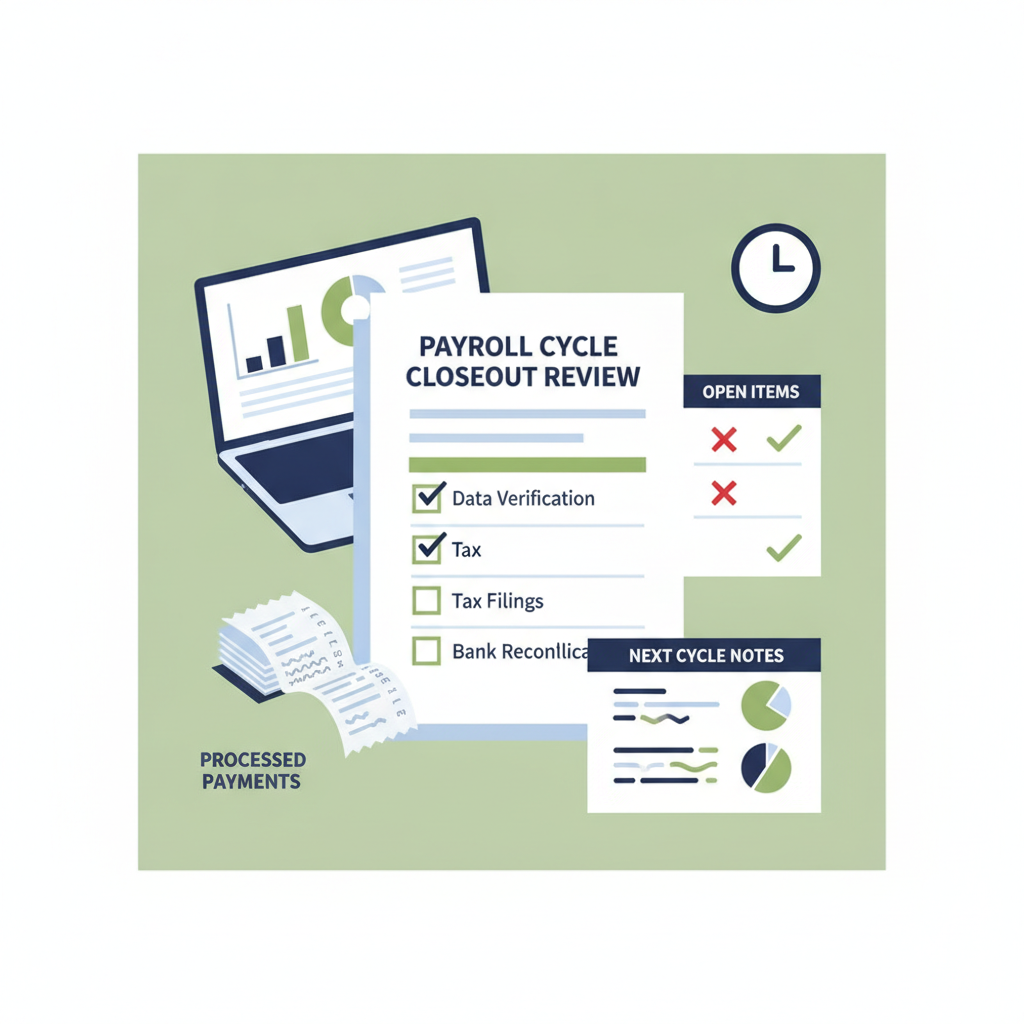
Assess reason, population, deadline, available alternatives, funding, approval, employee communication, and downstream work before requesting an extra run.
The short answer
Assess reason, population, deadline, available alternatives, funding, approval, employee communication, and downstream work before requesting an extra run.
Base the decision on an off-cycle decision record with cause, consequence, approved route, provider evidence, and post-run verification and keep consequential authority with the client.
Payroll handoff readiness check
Use this table before a provider or Philippines-based payroll support specialist receives access. Match every row to a named owner before the first login.
| Work area | Ready to hand off when | Owner check |
|---|---|---|
| Scope | Population, period, systems, deadline, and exclusions are written. | Confirm the decision and authority. |
| Evidence | Facts, claims, assumptions, and observations remain distinct. | Resolve conflicts. |
| Access | Named access is limited to the task. | Approve removal date. |
| Decision | Consequential questions have owners. | Record the decision. |
“There is no implicit trust granted to assets or user accounts based solely on their physical or network location.”
NIST SP 800-207
Describe the employee consequence and the last safe time
Capture what happened, who is affected, the ordinary pay date, requested date, source approval, amount basis, and consequence of waiting. Ask the provider for the last safe submission time, required inputs, expected processing path, and evidence of completion. Use exact dates and time zones. Urgent is not a sufficient category because it gives reviewers no way to compare cases.
Consider a late rate change for one employee. The gate should show whether the amount can enter the next ordinary cycle, whether another approved payment route exists, what an extra run changes downstream, and who may choose. The coordinator presents those options and deadlines. The authorized payroll or business owner accepts the route and employee commitment.
Account for work created by the extra run
List funding, approvals, provider fees, taxes, deductions, filings, ledger entries, payslip or statement output, employee communication, and later reconciliation. Confirm how the item will be excluded from the next ordinary file. A quick payment that is then duplicated or omitted from downstream records is not a clean resolution.
Apply the same access and changed-instruction controls used in an ordinary cycle. A deadline does not justify accepting bank details by reply email or letting one person prepare and release a payment without the approved separation. If the safe route cannot meet the requested date, escalate the choice with evidence instead of hiding the constraint.
Verify outcome and learn from the cause
After processing, compare the approved request with the payroll output, payment status, employee communication, and downstream records. Keep provider receipt and settlement evidence distinct. Close only when the requested outcome and reconciliation are verified, or when an authorized owner accepts a documented remaining action.
Classify the initiating cause, such as late source approval, interface rejection, calculation correction, missed employee setup, bank return, or policy decision. Review patterns without blaming the coordinator. Repeated off cycles may reveal a cutoff, ownership, or source-quality problem. OutsourcePayrollCompany.com can maintain the gate and evidence, while the client retains payment, funding, treatment, communication, and release authority.
Require a case statement that another reviewer can challenge
The request should identify the affected employees, approved source event, ordinary pay date, requested alternative date, amount basis, reason the normal cycle cannot be used, and consequence of delay. Replace labels such as urgent or payroll emergency with exact facts. Record who verified them and what remains unknown. This gives the decision owner a stable case even if the requester is unavailable. An incomplete request can still be escalated when the consequence is serious, but the missing evidence must stay visible rather than being filled by a coordinator's assumption.
Compare safe routes on the same page
List the next ordinary cycle, an approved off-cycle payroll, and any other route the client's policy permits. For each, show provider cutoff, likely processing events, funding need, control steps, employee communication, fees if known, downstream filing or ledger work, and duplicate-prevention method. Do not promise a date until the authorized owner and provider confirm it. The decision is not simply fast versus slow. A route that appears faster may create a second correction or omit required records. The gate makes those operational consequences available to the person who has authority to choose.
Quarantine the item from ordinary-cycle duplication
Once a route is approved, mark the source item with the off-cycle case reference and the ordinary file action. If it has already entered a pending batch, identify whether it must be removed, reversed, or left with a compensating instruction. Reconcile employee-level lines instead of trusting a net control. Use a new approved version for any correction. The provider receipt should identify the exact population and run. During the next ordinary cycle, test that the item did not recur. Duplicate prevention is part of the off-cycle control, not a cleanup task for later.
Close across payment and downstream records
Check payroll output, approval, payment or settlement evidence appropriate to the route, employee communication, payslip or statement, filing feed, and ledger result as required by the client's process. A provider submission status is not the final outcome. Keep unresolved bank, tax, benefit, or employee cases assigned. Then classify the initiating cause and decide whether the standard intake needs repair. Support can coordinate and reconcile. Client owners retain whether to run, treatment, funding, fees, employee commitments, communication, and final release.
Copy-ready brief
Payroll support role brief
Replace the tool names and owner details, then use this list in a provider call or job brief.
- Routine: Put a decision gate in front of off-cycle payroll requests
- Output: an off-cycle decision record with cause, consequence, approved route, provider evidence, and post-run verification
- Access: named, least-privilege accounts
- Approval: authorized client owners
- Stop: unclear source, identity, channel, scope, or authority
Questions from payroll buyers
Who owns off-cycle payroll request control?
Support prepares an off-cycle decision record with cause, consequence, approved route, provider evidence, and post-run verification; authorized client owners retain whether to run, payment method, funding, fee acceptance, employee commitment, tax or deduction treatment, and final release.
What should the first pilot include?
Use one representative cycle including a late approved change affects one employee and the requested date falls before the provider can complete ordinary controls.
How is progress reviewed?
Track requests, approved runs, declined or deferred cases, causes, provider turnaround, duplicate risks, downstream corrections, and total closure time, then verify consequential exceptions with their owners.
Sources
- IRS Publication 15 (2026), Employer's Tax GuideOfficial employer guidance for federal payroll records, deposits, reporting, and corrections.
- U.S. Department of Labor Fact Sheet #21Official summary of federal wage and hour recordkeeping requirements.
- NIST SP 800-53 Rev. 5Official security and privacy control guidance.
- Philippine National Privacy Commission: Data Privacy ActOfficial Philippine privacy resource for teams handling personal information.