
Outsource Payroll Company guide
Assign ownership for a payroll and HRIS integration
Published:
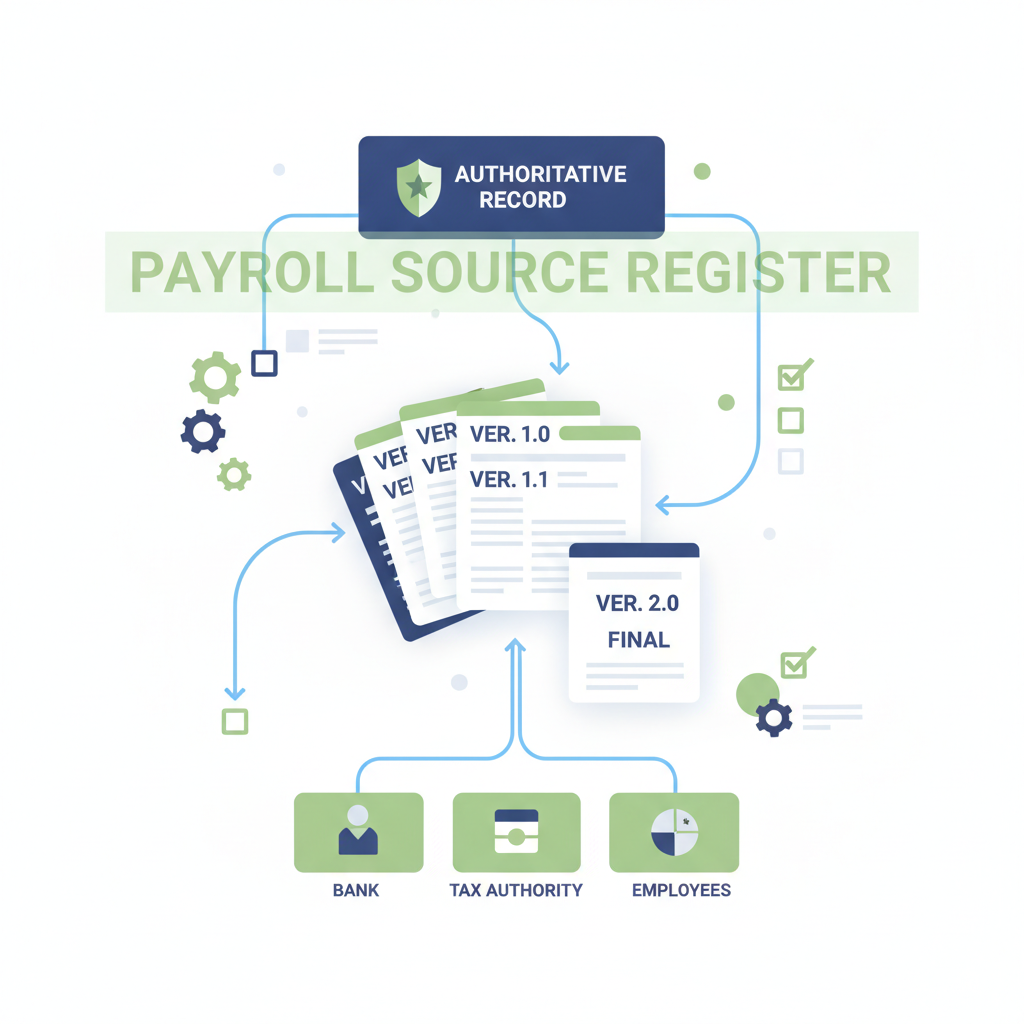
Define source authority, field mappings, error queues, monitoring, access, and change approval across payroll, HR, IT, and the provider.
The short answer
Define source authority, field mappings, error queues, monitoring, access, and change approval across payroll, HR, IT, and the provider.
Base the decision on an interface ownership map with field lineage, monitoring duties, and change controls and keep consequential authority with the client.
Payroll handoff readiness check
Use this table before a provider or Philippines-based payroll support specialist receives access. Match every row to a named owner before the first login.
| Work area | Ready to hand off when | Owner check |
|---|---|---|
| Scope | Population, period, systems, deadline, and exclusions are written. | Confirm the decision and authority. |
| Evidence | Facts, claims, assumptions, and observations remain distinct. | Resolve conflicts. |
| Access | Named access is limited to the task. | Approve removal date. |
| Decision | Consequential questions have owners. | Record the decision. |
“There is no implicit trust granted to assets or user accounts based solely on their physical or network location.”
NIST SP 800-207
Split transport ownership from payroll meaning
A payroll and HRIS interface needs at least two kinds of ownership. Technical owners operate connections, schedules, credentials, monitoring, and recovery. Business owners define what worker status, pay rate, effective date, work location, bank election, deduction, and organizational fields mean for payroll. A successful transfer proves only that a payload moved; it does not prove the population was complete or the values produced the intended pay treatment. Start with each employing entity and pay group, then name the HR, payroll, IT, security, and provider roles that prepare, interpret, approve, and verify the exchange. Keep policy, tax, employment, benefits, privacy, and final payroll decisions with authorized specialists. This division prevents the connector vendor or an available analyst from becoming the accidental owner of business rules.
Create a field lineage record before mapping
For every field that can affect inclusion, calculation, reporting, funding, or access, record the authoritative source, source definition, allowed values, effective-date logic, transformation, destination field, destination behavior, and business owner. Include whether blanks, nulls, defaults, and repeated records are valid. A mapping document that says department maps to department is not enough if one system stores a code, another expects a reporting unit, and payroll uses the value to select a rule. Mark calculated and concatenated fields plainly. Link examples to protected test records rather than copying employee data into the register. When the target cannot represent a source value, require an explicit design decision, affected-population assessment, and verification method instead of silently truncating or defaulting it.
Reconcile the population around every transfer
Compare records expected, extracted, transmitted, accepted, rejected, and applied. Use stable protected identifiers and cohort totals so duplicates and omissions cannot cancel each other in a grand count. Define the expected population from the approved source at a stated timestamp, including starters, leavers, leave cases, inactive records that still require payment, and retroactive changes where relevant. The receiver should return evidence that distinguishes a syntactically accepted row from a row actually applied to payroll. Review critical fields and monetary control totals as well as counts. If an interface sends only changes, retain the baseline and sequence information needed to prove that no event was skipped. Close a reconciliation exception only after the corrected output is generated and checked again.
Make rejection queues usable by named owners
A rejected value needs the field, record reference, rule, source version, detection time, payroll consequence, correction owner, deadline, and current state. Route technical format failures to the integration team and business-data questions to the field owner, while keeping one coordinator responsible for the case timeline. Do not correct a destination repeatedly when the authoritative source is wrong. Fix the source where appropriate, send a new version, and link the retest to the original rejection. Define what happens when a record cannot be repaired before cutoff; an authorized payroll owner decides the documented exception path. Support staff may assemble evidence and chase responses, but they must not select a plausible code simply to clear the queue.
Detect silent defaults as well as failed jobs
Some of the most consequential interface defects do not create a red status. A changed field length may be truncated, an unfamiliar code may map to a generic value, a missing date may inherit the processing date, or an empty file may be marked successfully handled. Monitor record counts, critical-field completeness, allowed-value distributions, effective dates, sequence numbers, duplicate keys, and selected control totals. Compare these with a recent valid baseline and the current approved population. Thresholds should trigger investigation, not automatically declare the output safe. Name who receives each alert, how quickly it must be assessed against the payroll calendar, and what proves resolution. A green scheduler dashboard is operational evidence about a job, not acceptance of the resulting payroll data.
Test a format change from alert to corrected pay output
Use a controlled non-production case in which the HRIS changes the format of one payroll-relevant field. Include one valid record, one value that should be rejected, and one value that would be dangerous if silently defaulted. Observe whether the change process identified the dependency, whether monitoring raised an actionable alert, and whether the queue reached both the technical and business owners. Correct the authoritative test record or mapping through the approved route, rerun the transfer, and compare the payroll output with the stated expectation. Record timestamps, versions, participants, and screenshots or logs in the protected evidence location. The test is incomplete if the file eventually succeeds but nobody proves what the destination stored or calculated.
Control service accounts and production changes
Inventory every user, service account, certificate, key, endpoint, folder, and support role used by the integration. Assign an owner, approved purpose, environment, privilege, authentication method, rotation process, expiry or review date, and removal trigger. Do not share personal credentials to recover a failed cycle. Mapping, schedule, endpoint, and transformation changes should have a request, impact assessment, approver, test evidence, release record, and rollback method. Separate the ability to develop or prepare a change from production approval where the operating model permits. Emergency access should be named, time-limited, logged, independently reviewed, and removed after use. Confirm removal rather than treating the ticket closure as proof.
Put recovery inside the payroll deadline
Define who notices a missed transfer, how the provider and buyer acknowledge it, which data version remains authoritative, and the last safe times for retry, controlled manual input, delayed processing, or escalation. A retry can create duplicates if the first attempt partially applied, so require an application-state check before resending. A manual file may bypass automated controls, so state the exact population, replacement checks, approver, and reconciliation needed when normal service returns. Keep funding and employee-communication decisions with their designated owners. Rehearse recovery while the primary integration contact is absent and confirm that backups can reach the logs, protected files, provider contact, and decision owners without using another person's account.
Review the interface through business outcomes
Track records expected, accepted, rejected, defaulted, duplicated, corrected after cutoff, and unresolved at approval. Measure detection latency, owner response, correction age, reruns, unauthorized changes, and recurring causes. Then inspect the events behind the totals. One silently defaulted pay-rate field can matter more than hundreds of routine successful rows. Review whether problems came from source quality, ambiguous definition, transformation, transport, destination behavior, access, or change control, and assign a remedy that addresses that layer. OutsourcePayrollCompany.com can maintain lineage registers, reconcile counts, organize error evidence, and coordinate retests within an agreed reporting and QA lane. The client retains system authority, business definitions, policy, security acceptance, production release, data corrections, and final payroll approval.
Copy-ready brief
Payroll support role brief
Replace the tool names and owner details, then use this list in a provider call or job brief.
- Routine: Assign ownership for a payroll and HRIS integration
- Output: an interface ownership map with field lineage, monitoring duties, and change controls
- Access: named, least-privilege accounts
- Approval: authorized client owners
- Stop: unclear source, identity, channel, scope, or authority
Questions from payroll buyers
Who owns payroll and HRIS integration ownership?
Support prepares an interface ownership map with field lineage, monitoring duties, and change controls; authorized client owners retain source definitions, integration design, access, mapping changes, production release, data correction, and residual risk.
What should the first pilot include?
Use one representative cycle including an HRIS field changes format and employee updates stop reaching payroll without a visible failure.
How is progress reviewed?
Track records sent, records received, rejected values, silent defaults, alert latency, correction age, and unauthorized changes, then verify consequential exceptions with their owners.
Sources
- IRS Publication 15 (2026), Employer's Tax GuideOfficial employer guidance for federal payroll records, deposits, reporting, and corrections.
- U.S. Department of Labor Fact Sheet #21Official summary of federal wage and hour recordkeeping requirements.
- NIST SP 800-53 Rev. 5Official security and privacy control guidance.
- Philippine National Privacy Commission: Data Privacy ActOfficial Philippine privacy resource for teams handling personal information.