
Outsource Payroll Company guide
Align the company and provider payroll calendars before the first cycle
Published:
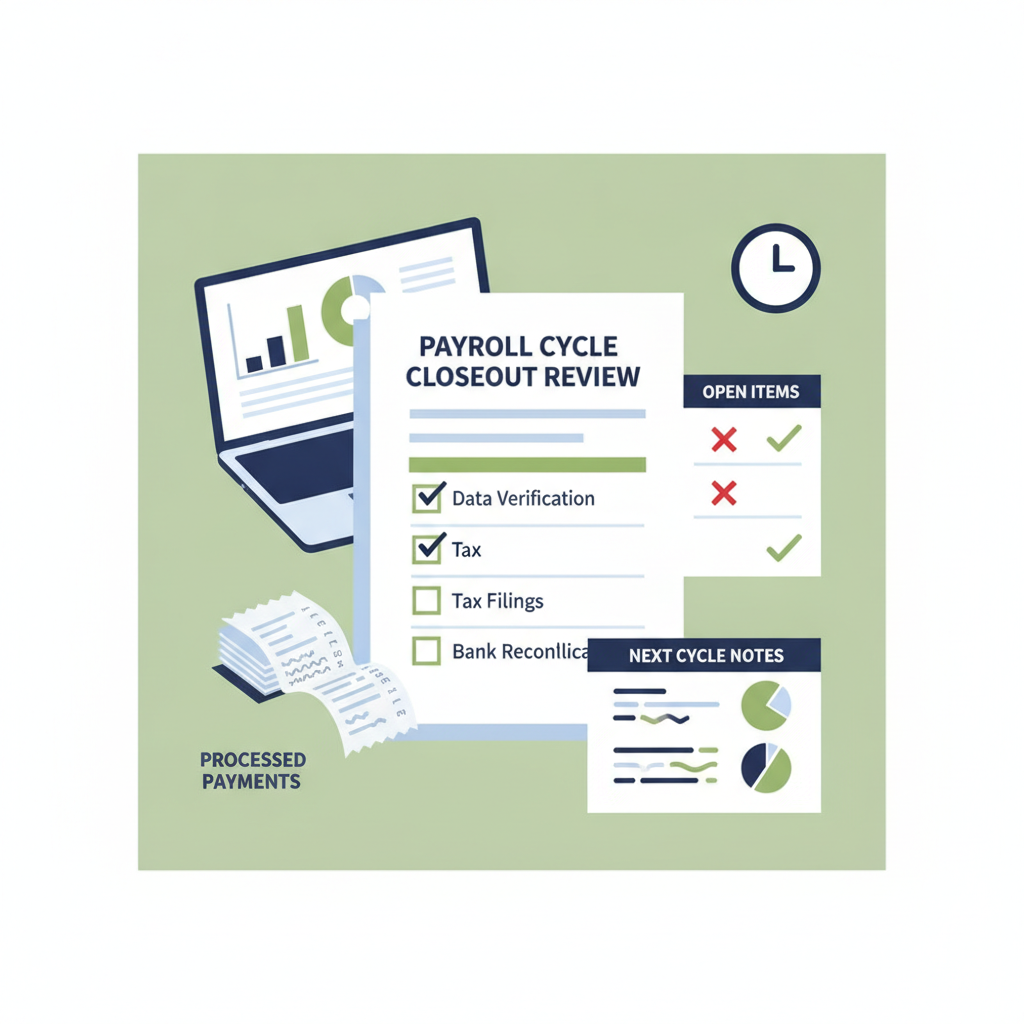
Turn pay dates into a working calendar of source cutoffs, review windows, funding deadlines, holidays, backups, and late-change decisions.
The short answer
Turn pay dates into a working calendar of source cutoffs, review windows, funding deadlines, holidays, backups, and late-change decisions.
Base the decision on one controlled payroll calendar with dependencies, time zones, owners, and exception rules and keep consequential authority with the client.
Payroll handoff readiness check
Use this table before a provider or Philippines-based payroll support specialist receives access. Match every row to a named owner before the first login.
| Work area | Ready to hand off when | Owner check |
|---|---|---|
| Scope | Population, period, systems, deadline, and exclusions are written. | Confirm the decision and authority. |
| Evidence | Facts, claims, assumptions, and observations remain distinct. | Resolve conflicts. |
| Access | Named access is limited to the task. | Approve removal date. |
| Decision | Consequential questions have owners. | Record the decision. |
“There is no implicit trust granted to assets or user accounts based solely on their physical or network location.”
NIST SP 800-207
Build backward from the moment employees must be paid
A payroll calendar should begin with the contractual or approved pay date, then work backward through settlement, bank acceptance, funding approval, final payroll approval, provider calculation, internal review, source collection, and manager authorization. Do this for each pay group rather than assuming one corporate pattern. Record the period start and end, currency, employing entity, payment route, provider processing window, and the time zone attached to every cutoff. A date-only spreadsheet creates false agreement when the internal team means close of business locally and the provider means an earlier platform cutoff elsewhere. The finished calendar should show the minimum usable time between stages, not just a row of milestones. That spacing reveals where one delay will compress the next control or make it impossible.
Inventory the calendars that already govern the cycle
Collect the provider schedule, HR and timekeeping cutoffs, finance close dates, treasury funding windows, bank holidays, company holidays, benefit file dates, tax or filing dependencies, and any union or employment commitments that affect timing. Keep the source and owner for each date. Two files with the same label may describe different events: payroll close might mean the last manager submission, the last accepted provider input, or the moment a calculation is locked. Define every milestone using an observable output. For example, internal review opens when the named reviewer can access the complete calculation and exception report, not when a system job is expected to finish. Mark assumptions and conflicts instead of selecting the more convenient date. The accountable owner resolves them before the calendar is approved.
Give every deadline an owner, backup, and acceptance signal
Assign responsibility at the level where work can actually stop. The timekeeping owner confirms approved hours, HR confirms authorized worker changes, payroll confirms the input population, the provider returns calculation evidence, treasury owns funding action, and an authorized payroll owner releases the cycle. Each primary needs a backup with current access and delegated authority. Also define what the next owner receives: an approved file version, control totals, an exception list, a portal status, or another specific record. A meeting invitation is not a handoff. Use a short acknowledgement rule for material calendar changes so silence cannot be mistaken for acceptance. If a backup may prepare but not approve, state that boundary and identify the escalation route rather than letting availability redefine authority.
Resolve the banking-holiday conflict as a real scenario
Consider a provider that moves its input cutoff earlier because a banking holiday shortens settlement time, while the internal HR calendar still shows the ordinary manager deadline. First confirm the affected pay group, bank and provider notices, settlement route, time zones, and last reversible point. Then trace the consequences backward. Managers may need an earlier collection date; payroll may need a protected review window; treasury may need an earlier funding decision. The provider cannot simply rewrite an employer policy, and an internal team cannot preserve the old dates by ignoring the bank dependency. Present the authorized owner with bounded options, affected populations, evidence, and the consequence of each choice. Once decided, update one controlled calendar and notify the owners whose work changed. Preserve the old version and decision record.
Separate ordinary inputs from late-change decisions
Publish a standard input cutoff and a distinct exception route. The exception route should state which facts are needed, who can decide, the last reversible time, the downstream checks that must be repeated, and how an item that misses the cycle will be handled. Avoid calling every late request urgent. A missing timesheet, retroactive pay-rate instruction, new starter, bank change, and court-ordered deduction can require different owners and evidence. The preparation team may log the request, confirm the approved source, identify the affected pay group, and show remaining time. It should not invent an effective date or promise inclusion. After an authorized decision, record whether the provider accepted the change, which calculation version contains it, and what reviewer verified the outcome.
Version the calendar without losing its history
Give the calendar a version, effective period, owner, approval time, and change summary. A material revision should identify the affected pay groups and milestones, the reason, source evidence, decision owner, acknowledgement status, and superseded version. Do not overwrite a shared file and rely on edit history that operational users cannot see. Distribute role-specific views from the same controlled source: managers need collection and approval dates, payroll needs detailed processing and review windows, treasury needs funding events, and employees need only accurate dates or actions intended for them. Protect provider contacts, internal escalation details, and sensitive operational information from unnecessary publication. Archive expired versions so a later correction or audit can reconstruct which instructions applied to the original cycle.
Test the time between milestones, not merely the dates
Walk one ordinary payroll and one compressed holiday payroll from source collection to confirmed settlement. Measure the usable hours available for completeness checks, provider processing, investigation, internal review, approval, and funding. Introduce a realistic rejected record and an unavailable primary owner. Require participants to use the stated backup and exception route. The test fails if the team must share credentials, bypass review, approve an unexplained variance, or depend on a person who is not actually available. Capture timestamps, versions, handoffs, and unresolved questions. When a stage finishes late, recalculate the remaining windows instead of pretending the original plan still applies. Revise the design where elapsed time or access evidence contradicts the written assumption, then repeat the affected portion.
Use calendar measures to find specific operating weaknesses
Track conflicting dates discovered, late inputs by source, compressed review windows, provider cutoff exceptions, calendar revisions, owner acknowledgements, backup use, and decisions made after the last safe time. Segment results by pay group and cause. A large number of late records from one source may indicate an unrealistic collection rule; scattered one-off exceptions may need different treatment. Review high-consequence events separately because averages can hide a missed funding action or unreviewed population. Measures should lead to a named correction such as an earlier manager deadline, clearer source ownership, a trained backup, or a revised provider handoff. They do not prove legal compliance or guarantee timely payment. Qualified owners still decide policy, employment, tax, treasury, and risk questions.
Operate one controlled calendar after launch
At the end of each cycle, compare planned and actual handoff times, note every exception, and confirm whether the next published cycle needs revision. Assign unresolved calendar conflicts before owners disperse. Review the full year when a provider, bank route, pay frequency, entity, system, or jurisdiction changes, because a local fix can create a later collision. OutsourcePayrollCompany.com can maintain the controlled schedule, collect acknowledgements, prepare dependency views, and package late items for decision within an agreed administrative support lane. The client retains approval of dates, holiday treatment, policy, funding commitment, employee communication, emergency exceptions, and final payroll release. A dependable calendar is therefore not a static list of paydays. It is a versioned operating agreement whose handoffs have been tested and whose changes remain visible.
Copy-ready brief
Payroll support role brief
Replace the tool names and owner details, then use this list in a provider call or job brief.
- Routine: Align the company and provider payroll calendars before the first cycle
- Output: one controlled payroll calendar with dependencies, time zones, owners, and exception rules
- Access: named, least-privilege accounts
- Approval: authorized client owners
- Stop: unclear source, identity, channel, scope, or authority
Questions from payroll buyers
Who owns company and provider payroll calendar alignment?
Support prepares one controlled payroll calendar with dependencies, time zones, owners, and exception rules; authorized client owners retain calendar approval, holiday treatment, late-change policy, funding commitment, emergency exception, and employee communication.
What should the first pilot include?
Use one representative cycle including the provider cutoff moves earlier because of a banking holiday that does not appear on the internal HR calendar.
How is progress reviewed?
Track calendar conflicts, late inputs, compressed reviews, cutoff exceptions, version changes, and owner acknowledgements, then verify consequential exceptions with their owners.
Sources
- IRS Publication 15 (2026), Employer's Tax GuideOfficial employer guidance for federal payroll records, deposits, reporting, and corrections.
- U.S. Department of Labor Fact Sheet #21Official summary of federal wage and hour recordkeeping requirements.
- NIST SP 800-53 Rev. 5Official security and privacy control guidance.
- Philippine National Privacy Commission: Data Privacy ActOfficial Philippine privacy resource for teams handling personal information.