
Outsource Payroll Company guide
Plan a payroll outsourcing implementation timeline from inventory to controlled go-live
Published:
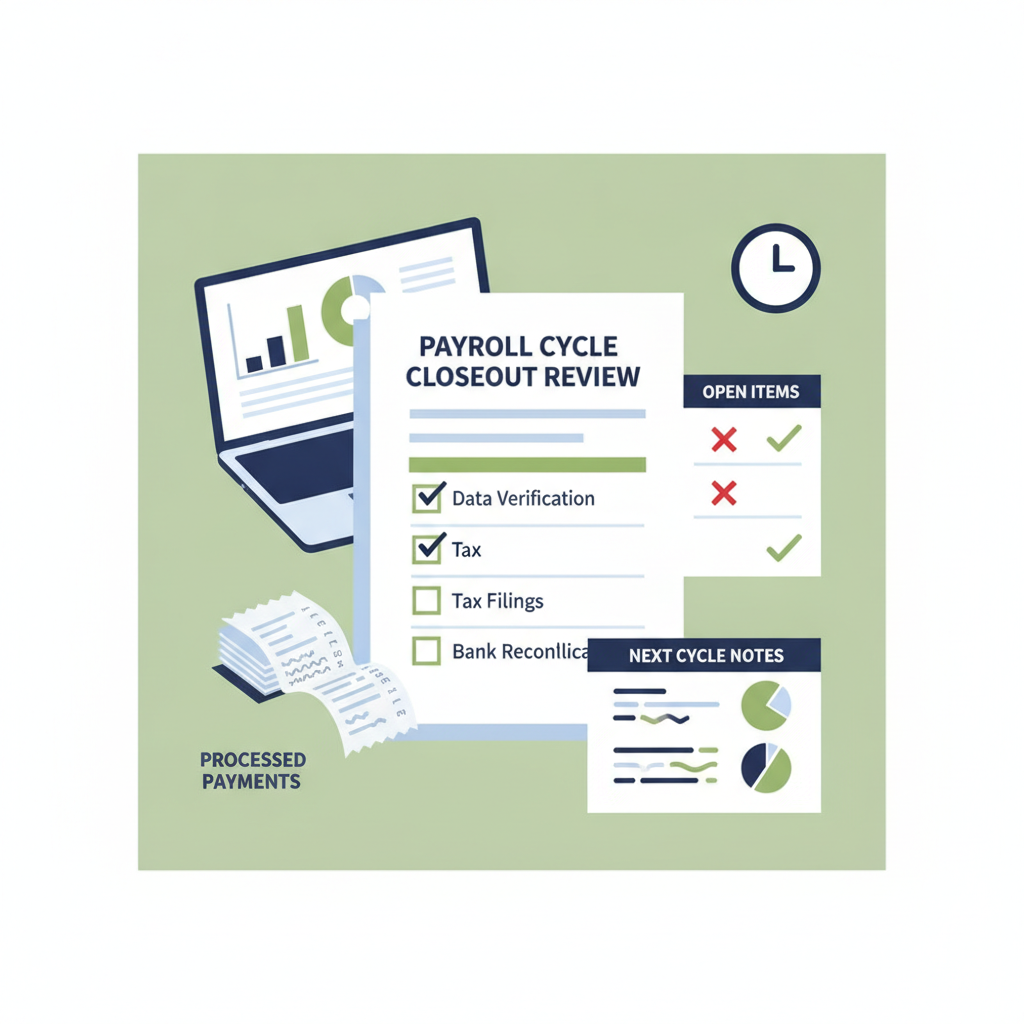
Build the implementation around decisions, data, testing, owner readiness, and reversible launch gates rather than one target date.
The short answer
Build the implementation around decisions, data, testing, owner readiness, and reversible launch gates rather than one target date.
Base the decision on a dependency plan with entry criteria, exit evidence, owners, contingency dates, and rollback gates and keep consequential authority with the client.
Payroll handoff readiness check
Use this table before a provider or Philippines-based payroll support specialist receives access. Match every row to a named owner before the first login.
| Work area | Ready to hand off when | Owner check |
|---|---|---|
| Scope | Population, period, systems, deadline, and exclusions are written. | Confirm the decision and authority. |
| Evidence | Facts, claims, assumptions, and observations remain distinct. | Resolve conflicts. |
| Access | Named access is limited to the task. | Approve removal date. |
| Decision | Consequential questions have owners. | Record the decision. |
“There is no implicit trust granted to assets or user accounts based solely on their physical or network location.”
NIST SP 800-207
Start the implementation planning review with a bounded decision
Build the implementation around decisions, data, testing, owner readiness, and reversible launch gates rather than one target date. The working output is a dependency plan with entry criteria, exit evidence, owners, contingency dates, and rollback gates. Name the entities, worker populations, payroll periods, systems, currencies, deadlines, and owners inside scope. Put exclusions beside the scope. A Philippines-based support specialist can collect records, maintain the comparison, and chase approved follow-ups. The specialist must stop when the work requires scope, policy interpretation, configuration acceptance, defect acceptance, go-live, rollback, and final payroll release.
Capture workstream, predecessor, owner, source, decision deadline, environment, test evidence, defect state, readiness gate, and rollback trigger. Keep protected details in approved systems and use masked references in coordination views. Label every item as a source fact, provider statement, buyer assumption, calculation, owner decision, or observed result. A copied value without a source, a date without a time zone, and an approval without scope remain gaps.
Use a scenario that exposes the handoffs
Test this event: parallel testing finds a recurring deduction difference five business days before launch. Before discussing a solution, write the expected source, preparer, reviewer, decision owner, backup, deadline, escalation, system record, and output check. Repeat the exercise with an ordinary event. The contrast shows whether the operating model works every cycle or depends on improvised attention during an emergency.
Watch for this failure: the project reports ninety percent complete because tasks started although source data and acceptance evidence remain open. Record what is missing and who can supply it. Do not reward a workaround that uses personal memory, shared credentials, an unverified message, or authority the preparer does not hold. A successful walkthrough is evidence about the proposed workflow, not a guarantee of future accuracy.
Make the topic-specific comparison
Arrange the plan by dependency. Calendars depend on pay groups, holidays, funding windows, and approval times; mapping depends on authoritative fields and transformation owners. Evidence-based gates are stronger than green status opinions. Conditional acceptance must name the defect, population, workaround, risk owner, expiry, and closure proof. Preserve a reversible checkpoint near launch and rehearse the delay or rollback decision, including change capture and duplicate prevention, before schedule pressure is real.
Apply this reproducible test: walk one employee event from source through mapping, provider input, calculated output, approval, and downstream record. Preserve the source version, observation time, participant role, output, exception, and follow-up. Ask for records that match the proposed service instead of generic marketing material. When evidence is confidential, note its scope, date, authorized reviewer, and conclusion without copying protected contents into a broad project file.
Inspect the implementation planning evidence field by field
Document workstream inside a dependency plan with entry criteria, exit evidence, owners, contingency dates, and rollback gates; preserve the source for workstream, the person who supplied it, the observation time, and the owner who can resolve a conflict. For implementation planning, test predecessor against a current protected record. Mark whether predecessor is confirmed, missing, stale, contradictory, assumed, or waiting for an authorized decision. Trace owner through the proposed workflow for implementation planning. Show where owner enters, who may change it, which validation applies, and what output proves the approved value survived. Give source a named acceptance check in a dependency plan with entry criteria, exit evidence, owners, contingency dates, and rollback gates. A reviewer should reproduce the check without relying on oral history, a private spreadsheet, or access beyond the declared role. Document decision deadline inside a dependency plan with entry criteria, exit evidence, owners, contingency dates, and rollback gates; preserve the source for decision deadline, the person who supplied it, the observation time, and the owner who can resolve a conflict.
For implementation planning, test environment against a current protected record. Mark whether environment is confirmed, missing, stale, contradictory, assumed, or waiting for an authorized decision. Trace test evidence through the proposed workflow for implementation planning. Show where test evidence enters, who may change it, which validation applies, and what output proves the approved value survived. Give defect state a named acceptance check in a dependency plan with entry criteria, exit evidence, owners, contingency dates, and rollback gates. A reviewer should reproduce the check without relying on oral history, a private spreadsheet, or access beyond the declared role. Document readiness gate inside a dependency plan with entry criteria, exit evidence, owners, contingency dates, and rollback gates; preserve the source for readiness gate, the person who supplied it, the observation time, and the owner who can resolve a conflict. For implementation planning, test and rollback trigger against a current protected record. Mark whether and rollback trigger is confirmed, missing, stale, contradictory, assumed, or waiting for an authorized decision.
Separate evidence from consequential decisions
Payroll support may organize facts, apply an approved comparison, maintain statuses, and prepare questions. It must not silently convert ambiguity into a company instruction. Decisions about scope, policy interpretation, configuration acceptance, defect acceptance, go-live, rollback, and final payroll release stay with named client owners and qualified advisers. If several functions participate, split the questions so payroll, HR, finance, treasury, tax, legal, privacy, security, and the provider accept only the portions within their authority.
Use authoritative sources for changeable recordkeeping, tax, privacy, and security statements. The IRS employer guide, Department of Labor recordkeeping summary, NIST control guidance, and Philippine privacy law support their respective subjects, but none replaces advice for the buyer's jurisdiction, workforce, contract, or facts. State an unresolved interpretation plainly and route it to its owner.
Build a decision record another reviewer can follow
The record should connect the original question, approved scope, sources, comparison method, exceptions, owner responses, and current result. Preserve rejected or superseded versions rather than rewriting the path after correction. Use statuses that name the next action, such as missing source, conflicting evidence, owner decision required, access blocked, provider response due, retest required, or output unverified.
A decision-ready summary leads with the choice required, affected population, deadline, last confirmed state, material conflicts, assumptions, evidence links, and consequence of no response. Separate mandatory conditions from desirable improvements. The owner should be able to accept, reject, condition, or escalate without reconstructing the case from meetings and private messages.
Protect payroll data throughout the review
Store payroll, tax, identity, banking, benefit, and employment records only in approved systems. A coordination view usually needs a case reference, masked population, period, status, owner, due time, and protected link. Do not move full exports into chat or private spreadsheets merely because the approved repository takes longer to open.
Use named accounts, multifactor authentication where available, and access limited to the task and population. Review permissions after the first cycle and remove what was not used. Unexpected payment instructions, identity documents, executable files, or urgent requests from an unverified sender belong in the company's verification or security process. A cutoff never makes an unsafe channel acceptable.
Pilot one complete cycle before expanding
Define one representative population, period, source set, expected output, reviewer, stop conditions, and rollback or exit path. Set an overlap window and time zone between the Philippines-based support lane and the client owner. Include at least one ordinary case, one late or incomplete case, and one high-consequence exception. Keep the pilot small enough that the owner can inspect every handoff.
Track dependencies cleared, overdue decisions, cases executed, defects by consequence, reconciled totals, and rollback readiness. These counts and times describe workflow performance; they do not prove payroll correctness, legal compliance, savings, or employee outcomes. At closeout, examine every consequential exception, remove unused access, keep unresolved items with owners and dates, and decide whether the evidence supports expansion, correction, negotiation, or a stop.
Read the implementation planning measures without hiding exceptions
Measure dependencies cleared for the declared implementation planning population and period. Record the numerator, denominator, exclusions, source system, observation time, and owner for dependencies cleared. Inspect the underlying cases before treating the result as a trend or provider comparison.
Measure overdue decisions for the declared implementation planning population and period. Record the numerator, denominator, exclusions, source system, observation time, and owner for overdue decisions. Keep owner-wait time and unresolved evidence visible instead of removing them to improve the result.
Measure cases executed for the declared implementation planning population and period. Record the numerator, denominator, exclusions, source system, observation time, and owner for cases executed. Inspect the underlying cases before treating the result as a trend or provider comparison.
Measure defects by consequence for the declared implementation planning population and period. Record the numerator, denominator, exclusions, source system, observation time, and owner for defects by consequence. Keep owner-wait time and unresolved evidence visible instead of removing them to improve the result.
Measure reconciled totals for the declared implementation planning population and period. Record the numerator, denominator, exclusions, source system, observation time, and owner for reconciled totals. Inspect the underlying cases before treating the result as a trend or provider comparison.
Measure and rollback readiness for the declared implementation planning population and period. Record the numerator, denominator, exclusions, source system, observation time, and owner for and rollback readiness. Keep owner-wait time and unresolved evidence visible instead of removing them to improve the result.
Calculate the last responsible launch decision
Place the provider configuration freeze, final source extract, access activation, funding rehearsal, user training, employee communication, and first live cutoff on one clock. For each dependency, record the latest time an authorized owner can reject it without creating an uncontrolled workaround. The last responsible go-live decision is the earliest irreversible boundary among those dependencies, not the date printed on the project slide. If a required owner will be unavailable, move the review earlier or name a qualified backup. Do not solve the absence by treating project management approval as payroll, security, treasury, or legal authority.
Model a reduced-scope launch separately from a full delay. A smaller population may reduce some exposure but can create duplicate data entry, split support routes, inconsistent year-to-date records, and unclear ownership between old and new processes. List those consequences before calling reduced scope safer. The sponsor should see the exact records and services that remain in each system, how changes are synchronized, who answers employees, and what evidence permits later migration. This calculation turns a vague contingency into a reviewable operating choice.
Run an owner exercise for implementation planning
Give the declared implementation planning owner this situation without a recommended answer: parallel testing finds a recurring deduction difference five business days before launch. Ask the owner to identify the authoritative record, immediate decision, prohibited shortcut, last reversible time, backup authority, and evidence that would close the event. Compare that response with a dependency plan with entry criteria, exit evidence, owners, contingency dates, and rollback gates. Any missing field becomes a specific design action rather than a general request for better communication. Preserve the owner's reasoning beside the scenario so a later reviewer can tell whether the operating rule changed or the facts were different.
Now introduce the known failure mode: the project reports ninety percent complete because tasks started although source data and acceptance evidence remain open. Ask the preparer to stop at the first point where written authority or current evidence is absent. Then apply walk one employee event from source through mapping, provider input, calculated output, approval, and downstream record. The exercise should produce an exception owner, next action, due time, protected source link, and observable acceptance check. Review dependencies cleared, overdue decisions, cases executed, defects by consequence, reconciled totals, and rollback readiness after the exercise, but keep individual high-consequence cases visible even when the aggregate looks acceptable.
Turn the finding into an accountable handoff
For Outsource Payroll Company, the practical boundary is preparation and evidence coordination. The support lane can maintain the register, compare approved fields, prepare follow-ups, and package exceptions for review. The client retains consequential decisions and final payroll authority. That division should appear in the working instructions, responsibility map, access design, and owner review.
Bring one redacted example, the current cutoff calendar, source systems, and owner map to a scoping call. Those materials are enough to design a checked first cycle around a dependency plan with entry criteria, exit evidence, owners, contingency dates, and rollback gates. Expansion should follow an observable successful handoff, not a broad promise that all payroll work can move at once.
Copy-ready brief
Payroll support role brief
Replace the tool names and owner details, then use this list in a provider call or job brief.
- Routine: Plan a payroll outsourcing implementation timeline from inventory to controlled go-live
- Output: a dependency plan with entry criteria, exit evidence, owners, contingency dates, and rollback gates
- Access: named, least-privilege accounts
- Approval: authorized client owners
- Stop: unclear source, identity, channel, scope, or authority
Questions from payroll buyers
Who owns implementation planning?
Support prepares a dependency plan with entry criteria, exit evidence, owners, contingency dates, and rollback gates; authorized client owners retain scope, policy interpretation, configuration acceptance, defect acceptance, go-live, rollback, and final payroll release.
What should the first pilot include?
Use one representative cycle including parallel testing finds a recurring deduction difference five business days before launch.
How is progress reviewed?
Track dependencies cleared, overdue decisions, cases executed, defects by consequence, reconciled totals, and rollback readiness, then verify consequential exceptions with their owners.
Sources
- IRS Publication 15 (2026), Employer's Tax GuideOfficial employer guidance for federal payroll records, deposits, reporting, and corrections.
- U.S. Department of Labor Fact Sheet #21Official summary of federal wage and hour recordkeeping requirements.
- NIST SP 800-53 Rev. 5Official security and privacy control guidance.
- Philippine National Privacy Commission: Data Privacy ActOfficial Philippine privacy resource for teams handling personal information.