
Outsource Payroll Company guide
A field-by-field diff for employee master-data changes
Published:
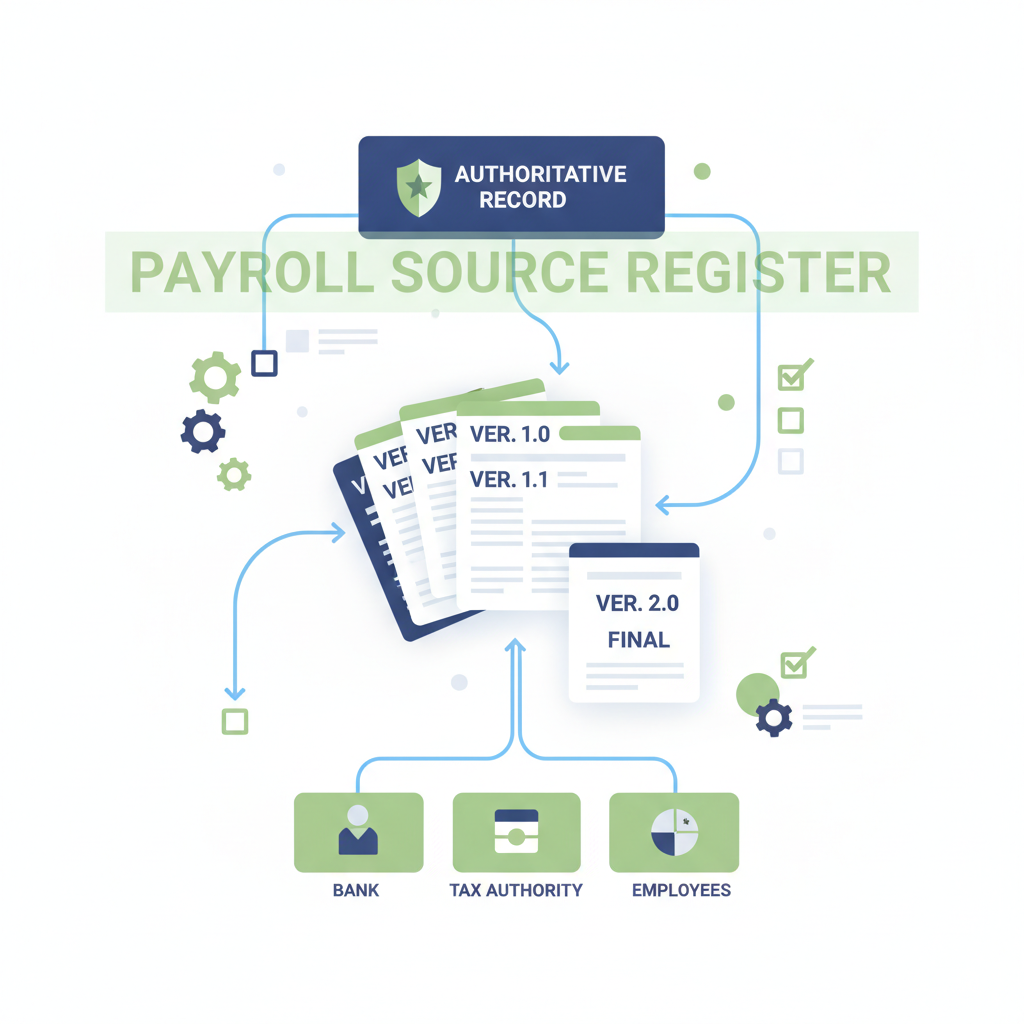
Compare approved employee changes with the payroll master record without overwriting the prior state.
The short answer
Compare approved employee changes with the payroll master record without overwriting the prior state.
Treat employee master-data change as a controlled evidence path, not an informal exception.
Payroll handoff readiness check
Use this table before a provider or Philippines-based payroll support specialist receives access. Match every row to a named owner before the first login.
| Work area | Ready to hand off when | Owner check |
|---|---|---|
| Scope | The employee master-data change population and payroll period are named. | Confirm inclusions, exclusions, and deadline. |
| Evidence | The record includes old value, proposed value, effective date, source approval, entry status, and output confirmation. | Resolve missing or conflicting authority. |
| Close | The expected output and follow-up date are written down. | Verify the final disposition against source evidence. |
“Verify identity, authority, source, and output at each sensitive payroll handoff.”
Outsource Payroll Company operating principle
Start the employee master-data change record with a precise boundary
Open one restricted record for the event and name the entity, pay group, payroll period, source, received time, and responsible owner. For this employee master-data change workflow, collect old value, proposed value, effective date, source approval, entry status, and output confirmation. A Philippines-based payroll support specialist can assemble and maintain the record, but should not infer missing approval or decide pay, tax, legal, benefit, banking, or employment treatment.
Preserve the source and current state
Keep the original request, the current payroll value, and every later version linked rather than overwriting them. Record what is known, what conflicts, and what remains unavailable. Use protected system references instead of copying sensitive values into email or a general tracker. This creates a reviewable history for employee master-data change without turning the queue into another payroll database.
Give the owner a decision-ready question
State the exact decision required, the affected records, the cutoff, and the consequence of waiting. Separate questions when different owners control different parts of the case. Support may compare records and prepare the packet; the authorized owner approves the disposition. A ticket assignment, chat reaction, or provider receipt is status evidence, not approval.
Verify the result at the correct stage
After an authorized action, compare the next payroll or provider output with the approved instruction. Check the affected record and a small set of surrounding control totals so an intended change does not hide an unrelated one. Keep the case open if payment confirmation, employee communication, a later-cycle reversal, or another dependency remains outstanding.
Close with a reusable control note
Record the final source, approver, action, output version, reviewer, completion time, and any limitation. Review whether the employee master-data change case arose from unclear intake, access, timing, source quality, or provider handling. Change the routine only when the evidence supports a specific improvement, and retain final payroll authority with the company-designated owner.
Copy-ready brief
Payroll support role brief
Replace the tool names and owner details, then use this list in a provider call or job brief.
- Role: bounded payroll preparation and evidence support
- Workflow: A field-by-field diff for employee master-data changes
- Access: named account and least privilege
- Stop rule: escalate consequential decisions
- Close: verify output against the approved source
Questions from payroll buyers
Can outsourced support approve a employee master-data change action?
No. Support can collect evidence, compare records, maintain status, and route a decision. An authorized owner must approve consequential action.
What belongs in the working record?
Keep the minimum review evidence: old value, proposed value, effective date, source approval, entry status, and output confirmation. Link to protected sources instead of duplicating sensitive data.
When is the case complete?
Close only after the authorized disposition appears in the expected output and every required follow-up has an owner and date.
Sources
- NIST Zero Trust Architecture, SP 800-207Official guidance for explicit verification and least-privilege access.
- Philippine National Privacy Commission: Data Privacy ActOfficial privacy-law text; obtain qualified advice for specific obligations.
- CISA phishing guidanceOfficial guidance for recognizing and reporting suspicious requests.